

Assessing Quality Wooden Windows
Throughout the window industry, the quality of wooden windows varies greatly. So, to help you know what to look for, we want to focus on the questions that you should be asking and how to spot a high quality timber window. To see what these products may look like, view our timber window galleries.
We understand that price is often a key concern when choosing your windows but many people don’t realise that poor quality windows can show signs of serious deterioration within the first decade. So, a higher quality product is saving you in the long-term as they can last up to 60 years.[Menzies, Whole Life Analysis…]
I’m continually dismayed to see how many UK consumers are duped into buying both timber and composite windows with really low quality softwood timber. Windows should not be made from any other type of timber other than dense slow-grown heartwood.
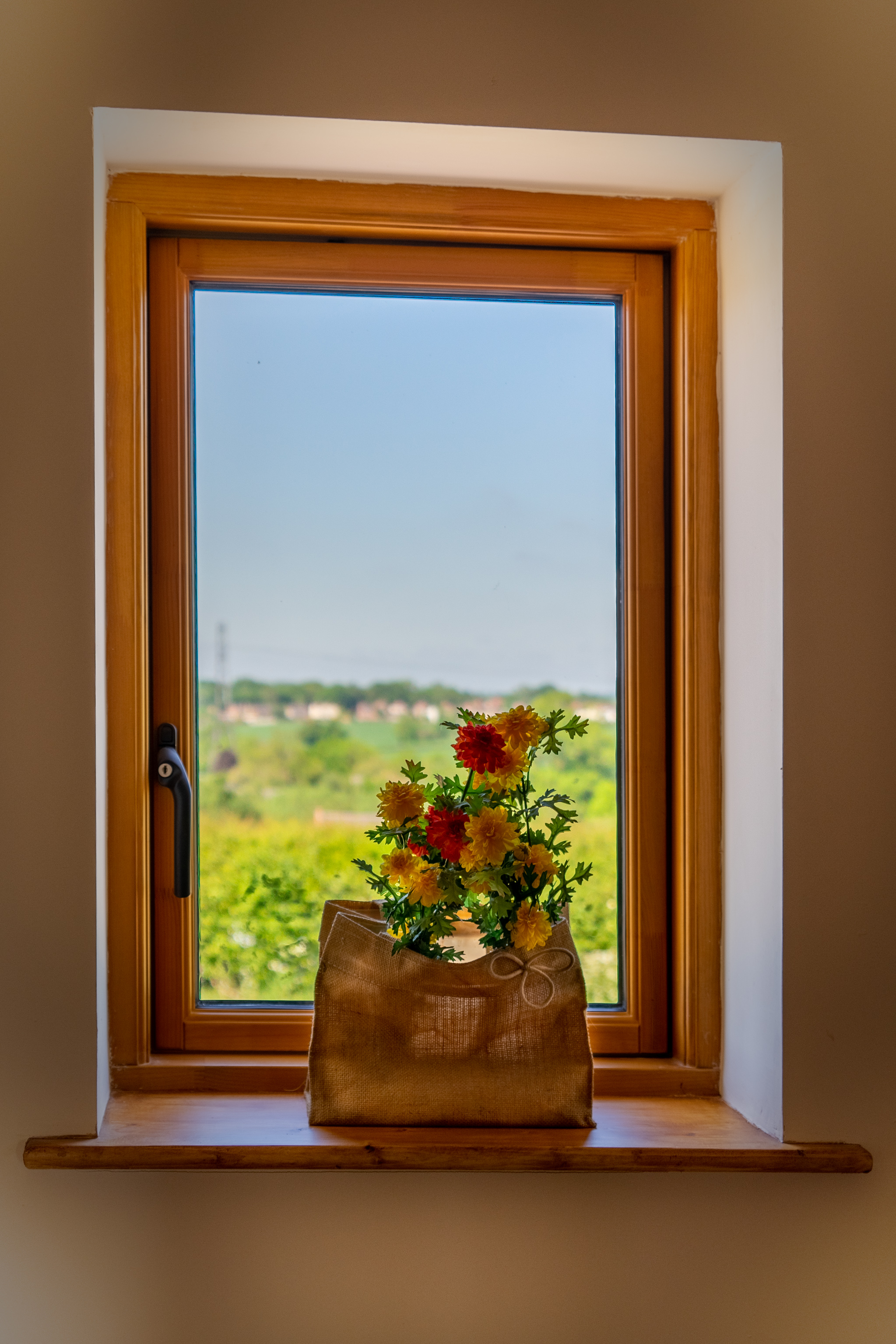 An Aluminium Clad Pine Window
Many consumers are also duped into thinking the aluminium skin of a composite window is a perfect impenetrable protection. This is certainly not true if the timber behind this is not of a joinery standard.
Benefits of German Windows
In Germany and Denmark, government run technology institutes dictate to factories how they must make their window products and the minimum standards to which they must abide. This means that the longevity of these products is considerably greater than in the UK. We do have kite marks and ISO standards in this country, but these do not properly govern the quality of the components making up the product.
Timber Density
The picture you see below is from one of our European factories and shows a 75mmx75mm end-on piece of timber, which has a density of 550 kg/m3 at ambient 12% moisture content.
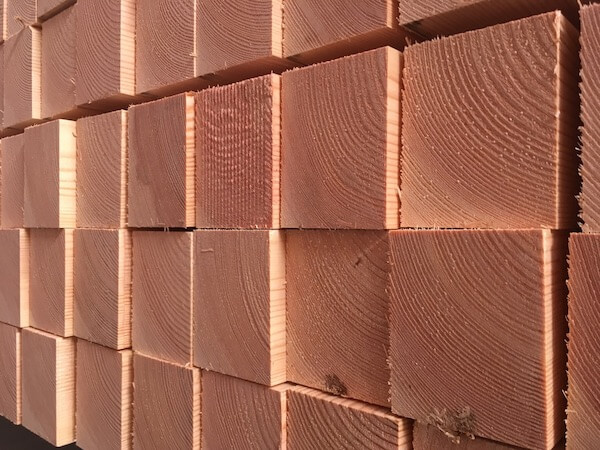
The growth rings are very tight, and the timber is much harder and denser than the timber you would normally see sold off the shelf in UK timber merchants.
A dense timber’s natural tendency to absorb moisture is low. This is super important and why our high quality wooden windows are only made from quality timber like this.
Compare this timber to a well known UK window manufacturer, whose timber density is 220-280 kg/ m3. Not quite balsa wood, but the timber has a high propensity to absorb moisture.
Timber does naturally absorb and expel moisture. And the degree to which it does so is directly related to the timber density. For a more detailed explanation into this, read about timber species.
Why is Timber Density Important?
- When timber absorbs moisture, it expands. Have you ever had to put your shoulder into a window to open it, or had a window that sticks badly?
- Dry Timber, from which your home is constructed, usually has a moisture content of 6-16%. It feels entirely dry to the touch and, during the seasons, the timber breathes: expelling or absorbing moisture depending on the natural humidity of the air around it.
- When moisture content in timber goes above 20%, the fungus that causes wet rot can start to become active.
- The timber also expands up to approximately 7% depending on the moisture content; this is a common cause of sticking or jammed windows.
- Windows made from dense timber are your insurance policy – so that if moisture does get in, then the timber’s natural tendency to act like a sponge is significantly reduced.
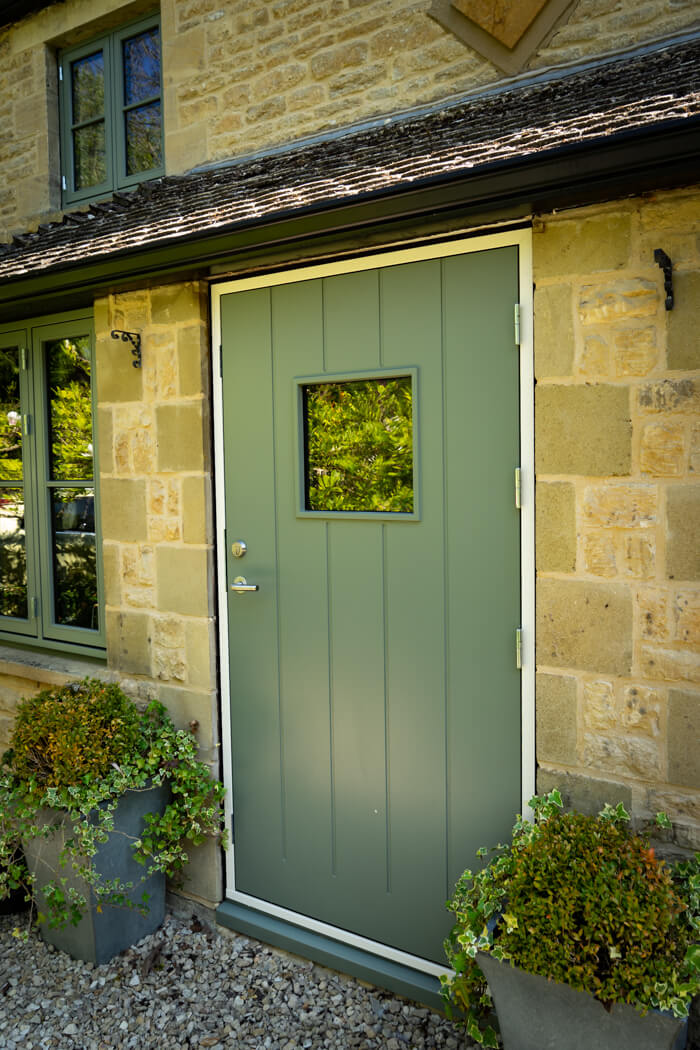
A Timber front door with vertical grooves
Questions to Ask When Buying Timber Windows
Ensure that you find out:
- What is the timber density used in manufacture? We suggest that it should be a minimum of 400 kg/m3
- Is it truly slow grown heartwood? At a recent UK Homebuilding show, I posed as a customer as one salesman tried to tell me that, because the timber they used was FSC, this was a sign of its quality! Certainly a sign of its origins, but definitely not of its quality or density.
- Is the face timber knot free? This is important too, as knots are often areas where the defects start to show and where problems can start. Quality wooden windows should be guaranteed to be knot-free. In addition, If the window has excessive joints and timber junctions on the external weather face, then again take this as an indication of likely poor quality.
References
- Menzies, GF 2013, Whole Life Analysis of timber, modified timber and aluminium-clad timber windows: Service Life Planning (SLP), Whole Life Costing (WLC) and Life Cycle Assessment (LCA). Heriot-Watt University, Edinburgh.
Contact us!
For any questions about our products and services, or to get your quote,
please get in touch by phone, email, or using our in-browser contact form!
Leamington: 01926 935 607
London: 0203 633 0476
E-mail : sales@enlightenedwindows.co.uk
Contact Form: Contact Us


Where to Start
Latest Blogs
Latest Galleries