
Buying Secure Windows and Doors
The security of your windows and doors is probably one of, if not the most, important area to be certain of. Interestingly in the UK, only windows going into brand new homes require a security certification. However, we think it’s equally important to ascertain the security properties of the product you’re buying if you’re renovating too.
Multipoint Locks
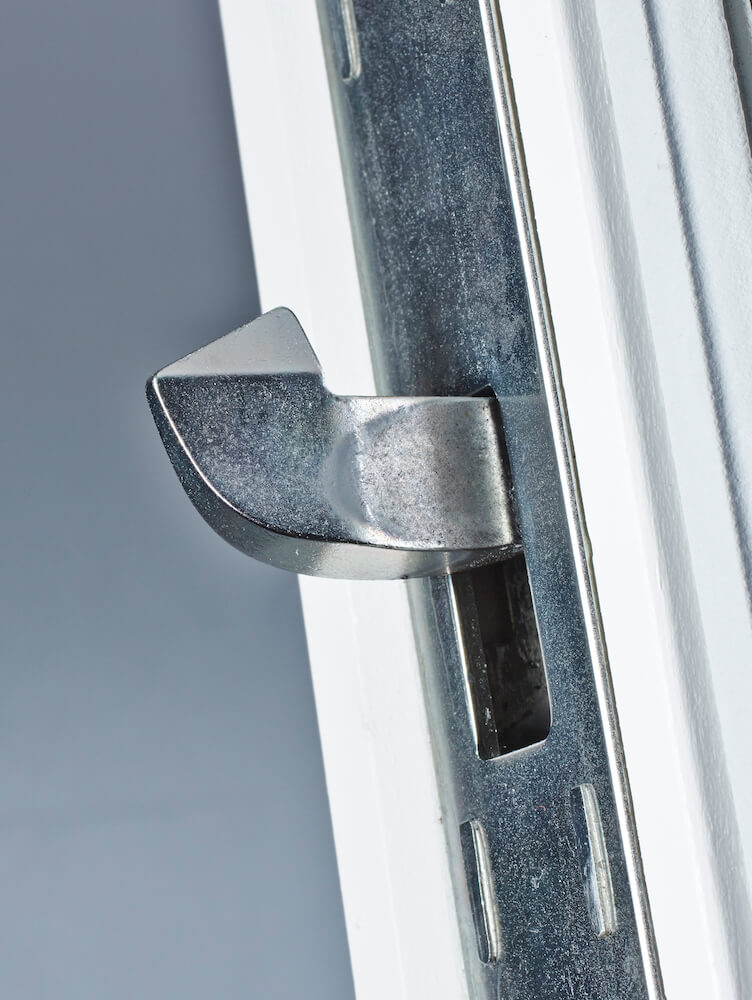
This is a standard item on higher-quality options. A multipoint lock in either a window or door means that turning a single handle or key results in locking points engaging throughout the frame. The mechanism within the frame is called the espagnolette. Normally, you can expect a window to have 2-3 locking points, and a door to have 3-5.
Both receiver plates and screws are reinforced. Hardened steel bolts are the norm and some companies include bolts on the hinge side of a door too. This is so that the door remains locked even if a hinge is forcefully removed.
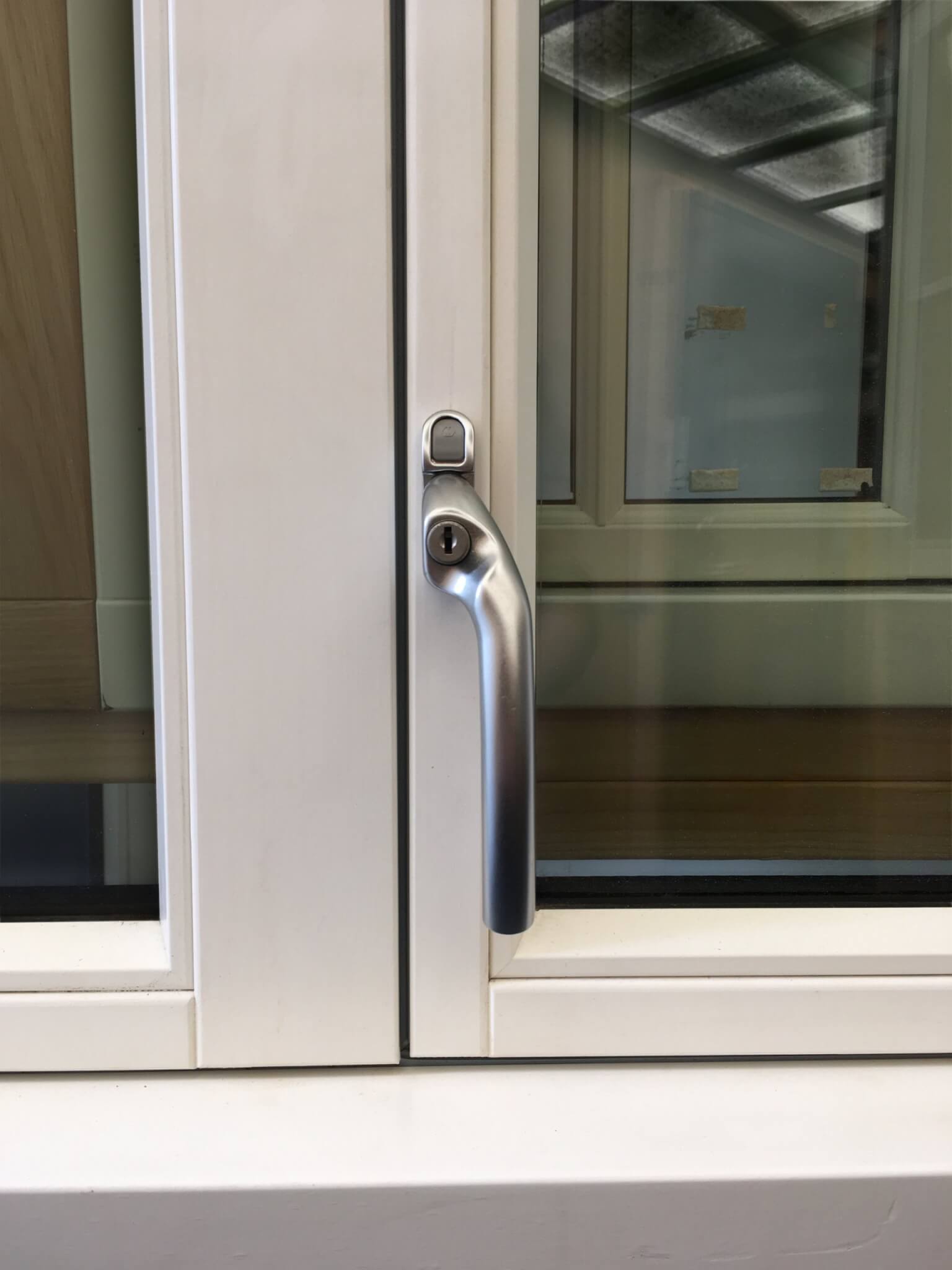
Key-Locking Window Handles
This is oddly an area for debate, the answer is not necessarily as simple as “lockable = more secure window”.
When you turn the key in any window handle, it doesn’t engage any extra pins or bolts. It purely prevents the handle from being turned, because turning the handle itself is what engages all the locking points in the window.
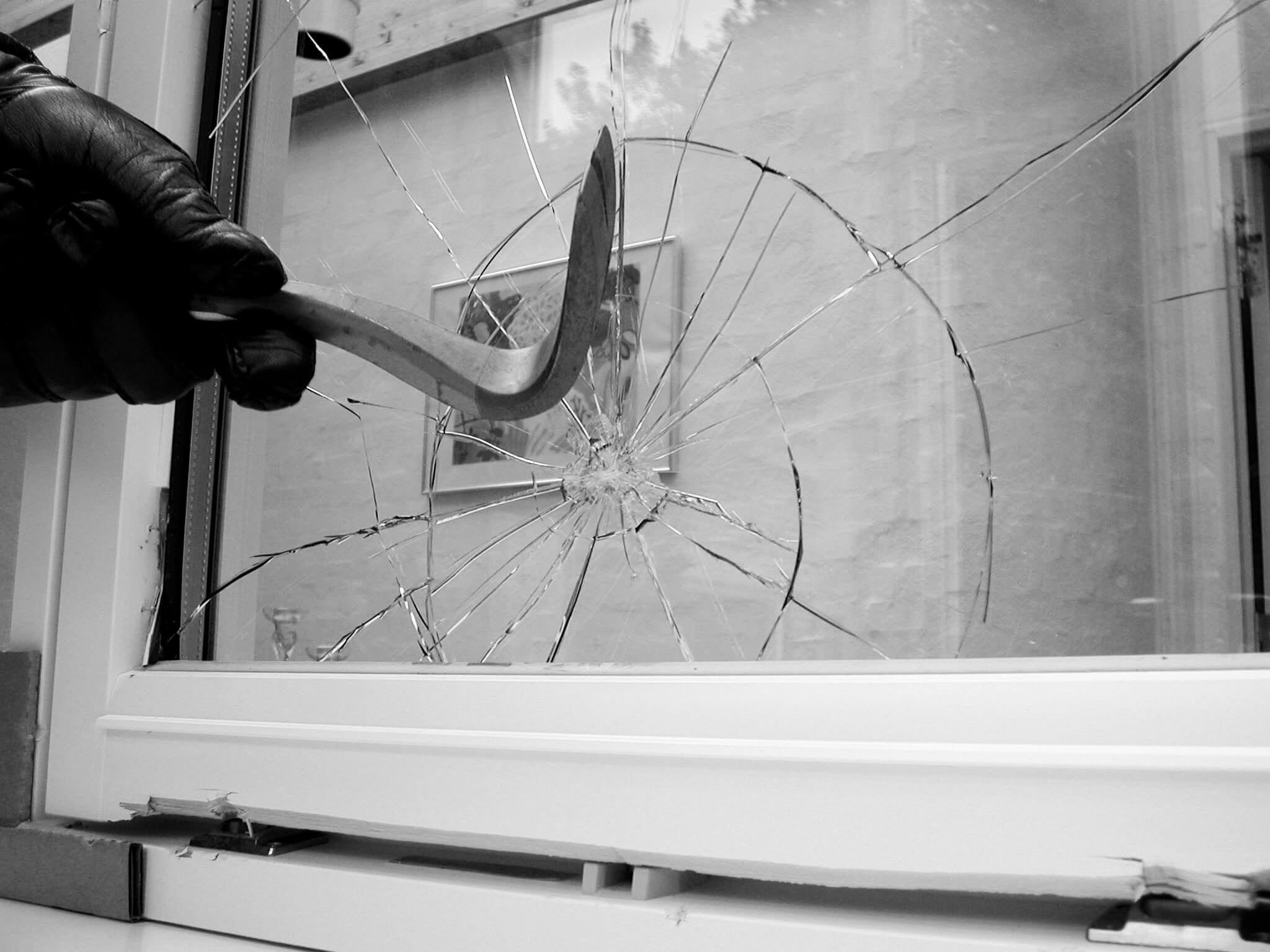
If an attacker is trying to break in, it’s not always easier if the handle doesn’t lock. Consider this with the fact that most people leave their window handles unlocked anyway, and that breaking at least two 4mm panes of glass to reach a handle would almost certainly awaken you and your neighbour.
Obviously, you should not ignore the peace-of-mind aspect for your family and any guests knowing the windows are locked. Plus, many home insurance companies favour having key-locking window handles.
We have found that our customer’s opinions are very split on the subject. Therefore, we believe the answer is not so straight forward and is more a question of preference and circumstance.
For more information about the handle options available, check out our Danish Window and Door Handles blog
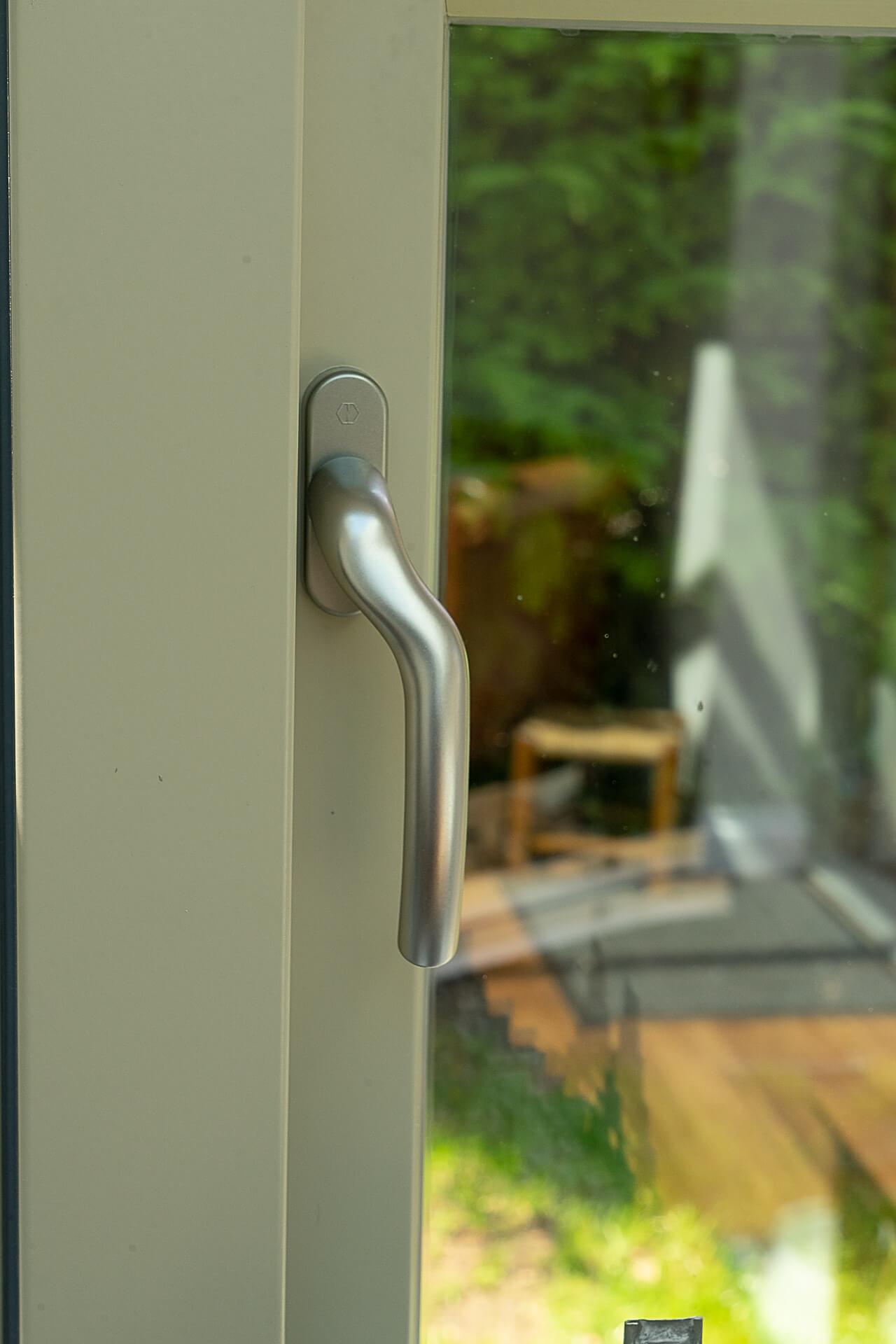
For more information about the handle options available, check out our Danish Window and Door Handles blog
Door Locks and Cylinders
Turning a key in a door lock is very different to a window. On a multipoint lock, bolts become engaged at the top, middle and bottom of the frame. The locking cylinder in a door is therefore very important for door security. We recommend making sure the product you’re buying comes with a lock from a reputable source.
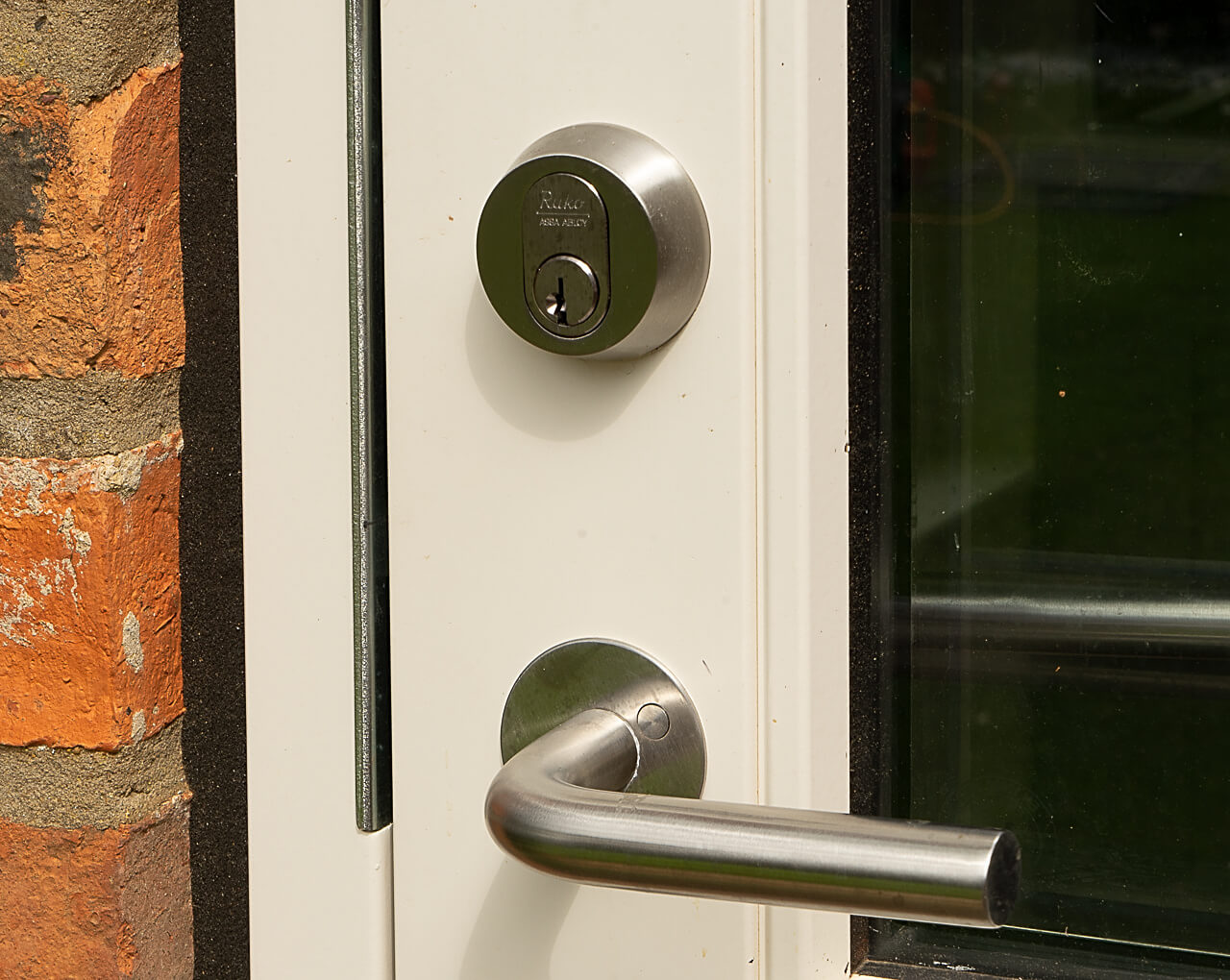
Our most popular solution is the Ruko Scandinavian oval lock. This is a 6-pin lock that checks 2 different height positions as you turn the key. To prevent key cloning, you must supply a code when copying.
A call from a professional UK locksmith drew our attention towards this lock. They had failed to unlock a customer’s home when their son became locked outside. After the customer supplied their code, a certified Ruko key-cutter quickly sourced a replacement key.
Keypads, Fingerprint Scanners and other “Smart” Locks
Electronic locks have both an electronic identification and a key, or a single lock with an override.
Double-locking is the equivalent of multifactor authentication. It requires you to have the key and know the code (much like needing your credit card and pin). This provides extra security. The only downside is it now takes longer to open your door than it otherwise would.
Single locking is the inverse of this, and one could argue that you lose security. It allows you to be vulnerable to code bugs or someone copying a keycard or code. Therefore making them able to open your door without a physical key.
Keys are still the best option, and will cost less than an electronic lock. Most people have no idea how to pick a key-lock, and even fewer know how to do it subtly. Plus, specifically for our locks, very few people in the UK are used to dealing with Scandinavian ovals.
Toughened and Laminated Glass
Safety glass comes in two forms: toughened or laminated. Most manufacturers offer both options, as they have unique structures.
Toughened Glass
Rapidly heating and cooling the glass in the tempering process, forms a toughened pane of glass. Becoming five times stronger than a standard pane of the same thickness.
Laminated Glass
This is actually two panes of glass sandwiched together with a lamination layer in between – resulting in a thicker pane. If the glass becomes damaged, the lamination layer holds all the panes together. A by-product of this method is an acoustic barrier – laminated glass is great for both security and sound insulation.
Since both solutions provide different types of protection (not necessarily better or worse). Our normal approach is to include one toughened pane and one laminated pane in the same glass unit. Our logic is that an attacker may have the tools to break through one type of glass pane, but they will be stuck using the same tool on the other pane.
Specific Tests and Certifications
Since almost all our products are manufactured by Danish companies, we must talk about UK and European certifications. We have some UK-specific certificates on this side of the channel.
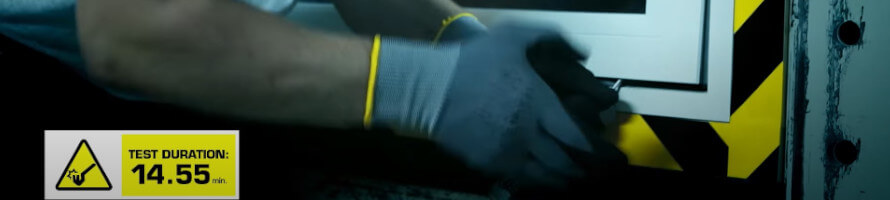
Starting with the easy part, the whole of Europe acknowledges four tests to be acceptable for newbuild secure windows. EN1627-30 is referenced by most European products, and these tests are part of the Danish factory DVV certification scheme (a well-known quality-guarantee certification in Denmark).
The UK regulations are a little more complex. For a window to be secure according to UK building regulations, it must be compliant with Part Q. Among other things, it must have a certification equivalent or better than PAS24 (EN1627-30 and LPS1175 is normally accepted). A UK home can sometimes optionally require Secure-By-Design, then it must also have SBD approval in addition to the items outlined in Part Q.
For replacement windows, none of this is officially required. For newbuilds, it’s worth asking your local building control to approve the certification that your preferred product has before you order.

Your Next Steps
If your quotation or the product brochure doesn’t display what they are providing for you security-wise, make sure to query your supplier. A lot of companies will be offering their best possible secure windows and doors as standard. However, we have come across a few who still offer cylinder upgrades.
If you’re looking for windows to a newbuild, the window suppliers you’re speaking to should be well-versed in security requirements. They should be able to tell you exactly how their window meets them.
Get in touch using our phone or email below for guidance with your next steps.
Contact us!
For any questions about our products and services, or to get your quote,
please get in touch by phone, email, or using our in-browser contact form!
Leamington: 01926 935 607
London: 0203 633 0476
E-mail : sales@enlightenedwindows.co.uk
Contact Form: Contact Us


Where to Start
Latest Blogs
Latest Galleries