


Traditional Aluminium-clad Bifold Doors
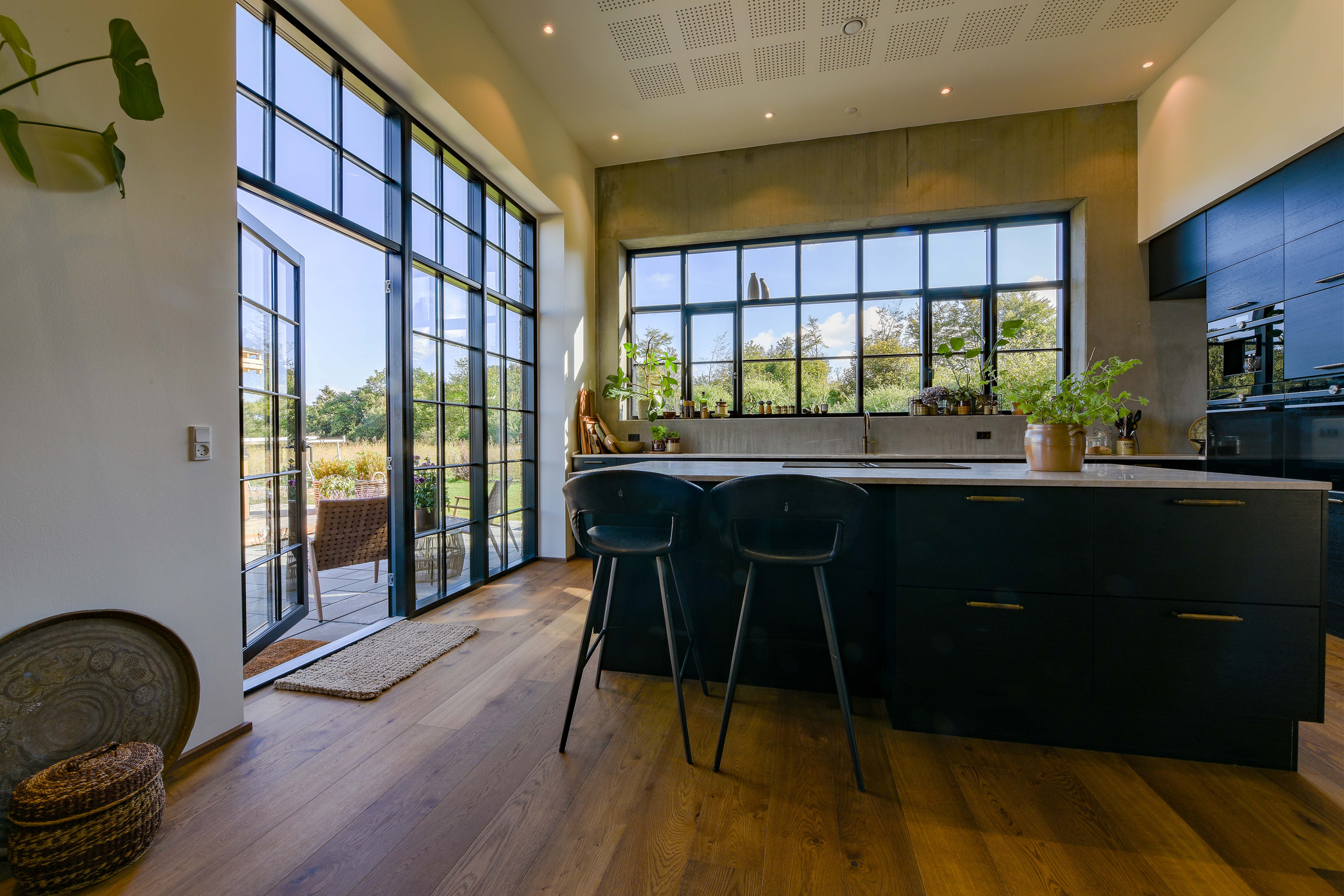
Unik Funkis in Denmark offer two bespoke options: a fully aluminium-clad timber traditional bifold door, and an almost fully-timber system… On their “timber” product, the key areas that always show signs of wear+tear first are made from aluminium instead – protecting the key surfaces.
Bifolding or Sliding Door for an Older Historic Home?
For a larger opening in any home, the choice that’ll always need making is whether to fill the space with the large panels but small overall opening of a sliding door, or the smaller panels with complete clear opening from a bifold.
From a classical appearance sense, the smaller panels of glass make sense in most cases. Add in the practical benefits and the naturally better airtightness from our Danish systems, and a bifold often becomes the correct answer.


Read more: Sliding and Bifolding doors
Avoiding the Traditional Problems with Bifold Door
Many cheaper bifolds have the same problems: lack of good sealing surfaces, dirt getting in the runners over time and frames swelling with temperature and humidity – making the inherent problems worse.
- Slow-grown Heartwood Nordic Pine: high density softwood with natural resistances to water ingress, decay and rot. Choosing a high quality of timber such as this massively reduces the risk of frames changing shape over time. So your new bifold is far less likely to stick in random places.
- Butyl Rubber Compression Seals in multiple positions: whilst a single sealing point around outer edges has proven to provide top class airtightness rating in Danish systems, seals inbetween bifold leaves require more thought. The double compression gaskets on the externally hinged interlock effectively seal four surfaces together. And the singular compression seal set within the internally hinged upright seals three points together.
- Top Hung Bifolding Leaves: avoiding a bottom track entirely means there’s nowhere for dirt+dust to settle. Partly great for avoiding extra hoovering, mostly beneficial to stop doors becoming harder to open over time. Keeping the rollers encased in the top rail keeps them clean and increases their lifespan.


How do Top Hung Bifold Doors Work?
We’re still a little bemused by how simple this is. And it’s not a brand new untested idea by any stretch! We’ve stumbled across plenty of old top hung bifolds across Denmark in our travels – it’s clearly a far better long-term solution than the massive bottom tracks we normally see in the UK…
The head of the bifold of course is the most important part. The system requires a strong structure above to support the weight of the leaves – both when the doors are stationary and when rolling across. In the UK, our construction industry favours steel “I” beams; a completely acceptable alternative to the Danish preference of glulam timber lintels.
Below the lintel sits the Unik Funkis carrier and top rail. Directly fixing into the beam above ensures it’s solidity throughout its full life. To allow for any movement in that lintel, you’ll see the adjustment screw built into the roller. Adjustment is always expected within the first few weeks as all the components settle into their new home.

At the base, we find the surprisingly simple part: and the ultimate reason why these top hung systems are so reliable. Gravity. Since the top roller extends out beyond the face of the frame, gravity (beyond obviously pulling the doors downwards) naturally pulls the door leaves into the outer frame. Meaning the only item needed to stop them going too far is the low friction roller that runs along the front of the threshold.

In case you’re wondering: gravity keeps everything in line, but that’s not what we’re relying on for security. Steel bolts extend downwards from both the top and the bottom of each door leaf into steel receivers.


Glazing bars
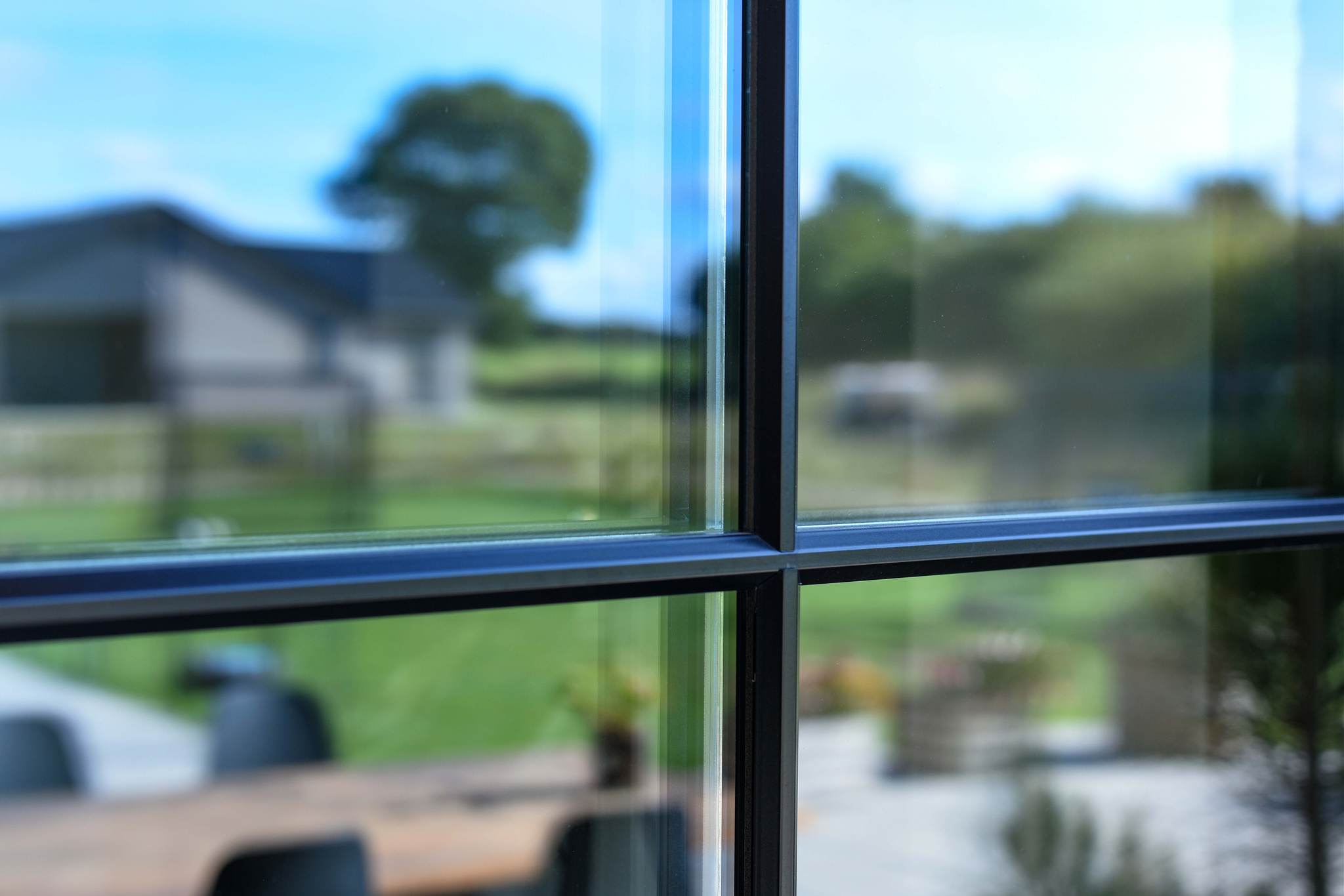
Of course, as with all of the Unik Funkis window and doors lineup, super slim 19mm glazing bars can be added to a traditional bifold door, perfect for keeping the historic style of a home without losing too much light.
Extra Traditional Bifold Options to Consider
- Does your new door include a large amount of glass on a south facing wall?
- Solar glass can help keep the room cool during the summer months without reducing your insulation in the winter
- Do you need low maintenance?
- Unik have both timber and aluminium-clad bifolds. Timber products need to be gently washed once a year and a re-paint is recomended after 5-10 years. Aluminium clad models only need to be cleaned.
- Do I need a new lintel to carry the weight?
- Unlikely in most cases. In most homes, having an opening the size of a bifold requires a hefty supporting lintel regardless. We always check on our supply-and-fit survey to make sure there is enough support in place.
- Can I use a bifold like a normal door?
- Yes, all of our bifolds have a master door. This can be used as an everyday entrance door without needed to fold any leaves
- Can I have a flush threshold?
- No. And this an important choice! Doors with flush thresholds are not as airtight or watertight as doors with stepped thresholds. Should you choose the flush route, we won’t judge you! We simply are not comfortable supplying a product that we don’t trust to keep the wind and rain outside.
- How wide are the sightlines between the glass?
- The vertical sitelines are 115mm. Unlike sliding doors, they don’t suddenly look massively larger when viewed off-angle.
- What is the largest door I can have made?
- Our maximum size for a 6 panel aluminium-clad timber bifold door is 4500mm wide by 2200mm high
- What is the smallest door I can have made?
- Out minimum size for a 3 panel bifold door is 1600mm wide by 1700mm high. Although, for smaller doors we would recommend considering a more simplistic double door should the panel sizes be sensible – this is always more cost effective.
- How deep are these bifold doors?
- The total door system depth is are 149mm, including the roller area. The outer frame itself is 116mm – this is designed to match other Unik Funkis doors and windows.
Finally a few images of our Unik Funkis Bifold Doors


Contact us!
For any questions about our products and services, or to get your quote,
please get in touch by phone, email, or using our in-browser contact form!
Leamington: 01926 935 607
London: 0203 633 0476
E-mail : sales@enlightenedwindows.co.uk
Contact Form: Contact Us


Where to Start
Latest Blogs
Latest Galleries